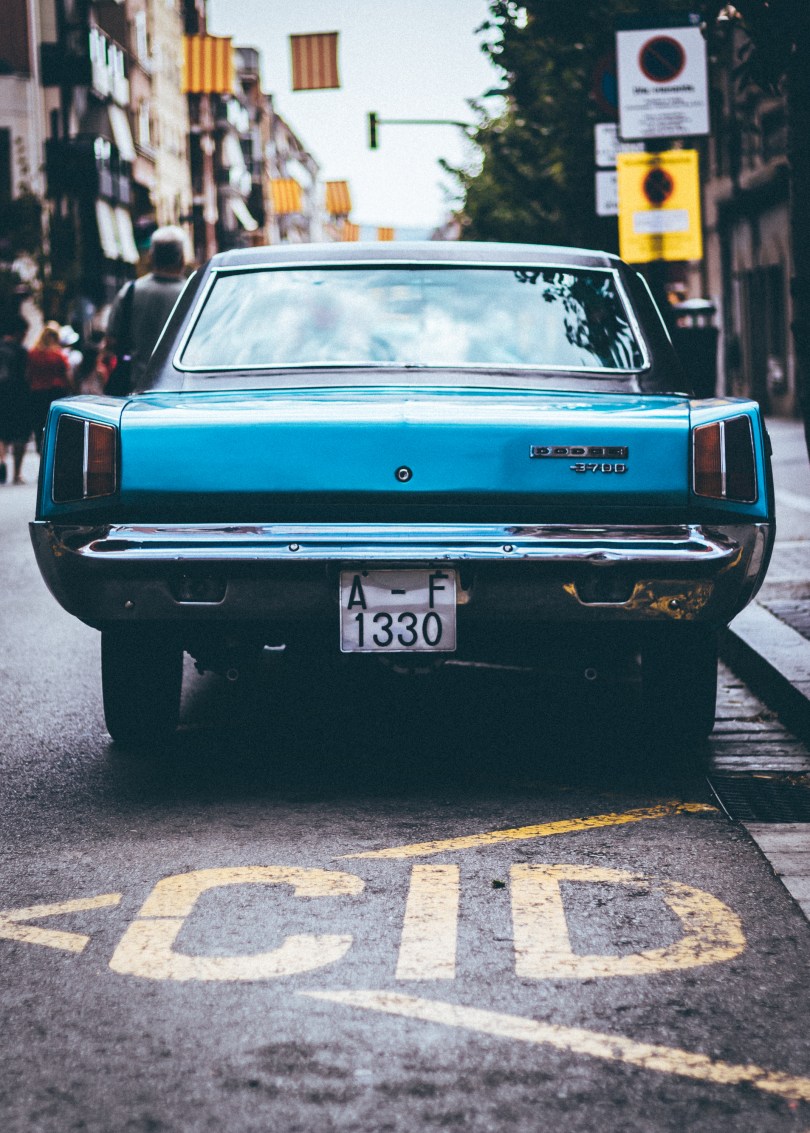
The glow of the moon peeked through a small, rust hole in the corner of the trunk of the car. It was the only light The Boy could see. A tiny ray of hope in the darkness. The air was full of dirt and gasoline, their fetid odour mixing with his own sweet and pungent stench. Tiny droplets of sweat trickled off his hair, stinging the corners of his eyes. His jeans were wet from urinating where he lay. In that trunk. That trunk to freedom.
This Younger Man said that he was there to help. Told The Boy he would get him out. Help him escape from the cage The Boy had lived in since the Older Man took him all those months ago. The Boy didn’t know exactly how long it had been. He had stopped counting after a while.
This Younger Man had come to fix the generator, the one that lit The Boy’s dank cell. He told The Boy to hide in the trunk of his car; to lay silently on the cold and greasy metal. He told him he would take The Boy to the cops. That everything would be okay. That the next town was only an hour away. But now it was night time and The Boy was starting to wonder if he’d made another stupid mistake.
The Boy should never have got into the Older Man’s car all those months ago. Should never have been so trusting. But he was desperate. Desperate to escape a father who turned his fist to his son, once his wife was no longer alive to beat on. He’d seemed nice, the Older Man. He wore a crisp, white shirt, with a pen poking out of an ink-stained pocket. “Damn pen,” the he had said. “I’m just going to drop by my place to change, then we’ll be on our way.”
The Boy had sat on a scratched and weather-worn sofa on the Older Man’s porch, sipping lemonade. He was on a farm. Land spreading out as far as he could see. The Boy had never been on a farm. Never been out of the city. He was enjoying the warmth of the sun, the cool liquid running down his throat.
Then, he awoke in that cage.
The Older Man never touched him. Never spoke even spoke to him. Not even when The Boy screamed and cried and beat his head against the bars until he bled. He kept The Boy fed. Even gave him a TV. The Boy asked why he was there. He begged to be set free. But the Older Man only ever smiled. The same smile The Boy had trusted the day he got into that car all those months ago.
“Not long now,” The Boy heard whispered through the steel above him. Then the thud of footsteps, followed by the metallic slam of the door. As the engine came to life with a shrill squeal followed by a roar, fumes seeped through the small, rust hole that had given The Boy such hope. Then the car started to move again. But towards what, The Boy didn’t know.
So, you sit down to watch the new season of The Walking Dead, you wish you’d had time to do that rewatch of last season like you meant to do, but oh well, you’ll be fine, after-all, you love this show! Then suddenly, you’re confused because there’s a guy saying stuff about a thing and you know you should know who he is, but you just can’t place him. Is he from The Kingdom? Or was he a Saviour? Was he even in last season? You’re sure you’ve seen him before but…WHO IS THAT GUY?!
Never fear, the wiki is here!
Wiki’s have become a stable in the lives of fans. A central encyclopaedic housing of information about television shows, movies, gaming, book series, anime and even entertainment brands. A wiki is a free, collaborative space that brings together detailed knowledge, and passion under one umbrella of awesome.
A wiki can feature anything from episode breakdowns and transcripts, to cast and character biographies. They explore the canon and lore of the Universe they’re dedicated to, and catalogue weapons, vehicles, animals, music, and some even document fan life and fan projects.
But with so much information to cover, what makes a good wiki, and what does it take to manage a wiki and ensure it remains relevant.
A good example is Supernaturalwiki, which went live in August 2006, just shy of a year after the TV show premiered. It is an independent wiki, that is not-for-profit and ad-free. With over 3700 entries, and around 40,000 visitors a month, the Supernaturalwiki, AKA SuperWiki, is not just a source for fans worldwide, it is also used by the media, and the people who produce Supernatural including the writers, production crew and cast.
With over 2000 users having contributed to the site, Managing Editor, Jules Wilkinson knows that a good wiki must not just be accurate, it must also be detailed, well-organised, and importantly, up to date.
“Keeping the site current is a challenge,” Jules says. “As people can choose to contribute what they contribute and when, so a particular entry or category may languish as editors change. We do have an organised roster for completing episode recaps and transcripts, in order to ensure they are updated soon after an episode is broadcast.”
Part of Jules’ role is to support new contributors, helping them to learn how to code, and understand the Wiki conventions and helping them get the most out of their involvement. In any given week there are usually around 20 people actively working on the SuperWiki, all adding their own perspective and talent to it, whether that’s copy editing, or contributing their expertise on Egyptian mythology or Simpsons references.
For Jules, “Being an editor should be creative and enjoyable and people should feel they can make their mark on the site. I review edits for accuracy and appropriateness and identify areas of the SuperWiki which need updating. We have always been a very harmonious site,” she adds. “It’s only very rarely there will be conflict over some interpretation of canon.”
What makes the SuperWiki unique though, is that it documents the Supernatural fandom alongside the show. It not only covers what happens on the show, it covers behind the scenes, conventions, charity projects, fan fiction, shipping and other creative fan endeavours whether it’s a cookbook or a podcast.
“These aspects are not kept separate,” Jules says. “For example, you can read an entry about the character Jack Kline on the show and follow links to the JackLovesNougat roleplaying account on Twitter.”
Another thriving wiki site is Fandom, an international entertainment company and the home of wiki pages formerly housed by Wikia. It is a free of charge and for-profit site, which currently hosts several thousand wikis in all different languages.
Like Jules from the Supernaturalwiki, Fandom’s Managing Editor of Australia, Jeremy Ray believes in the importance of keeping a wiki current and ensuring its accuracy.
“I love it when a wiki is very up-to-date,” says Jeremy. “And of course, accuracy is very important. It’s very helpful to know when you can reliably check a wiki for the contents of the latest weapon crate in CS:GO, or to find out all about the new Overwatch character.”
At Fandom the larger wiki admin teams function somewhat like mini-governments. They meet regularly and vote on policy decisions, manage and assist newer members, and moderate contributions from the public, liaising with the content team as necessary.
Primarily the wiki admins own their space at Fandom, if they feel rumours, guides, tips, etc have a place within that space, then that’s their prerogative. Though some prefer to keep their spaces for lore only.
“Like our Wookiepiedia,” Jeremy says. “Which refers to the events of Star Wars as if it’s actual history.”
One of the complex issues a wiki editor may face is where there are multiple entries for the same character, or brand. For example, on the SuperWiki, if there are alternate reality characters do you house their information on the original version of that character’s page, or do they have their own page, because in essence they are their own character, even though they share a character name and actor. Or at Fandom when you have a character/brand overlap, which means there’s a Mario page on the Nintendo wiki, the Mario wiki, and the Smash Bros wiki. This is why structure and organisation are so important. A fan is not going to use a wiki that is difficult to navigate, so part of the editing and management of a wiki is discussing and dealing with these types of issues, to ensure the fan experience is protected.
“We try to assist in those situations,” Jeremy says. “To make sure the content can easily be found by both the user and Google.”
Jules adds, “There is on-going discussion with editors about whether it is better to have one large entry on a topic or several smaller pages and how to catalogue something within the site so people can find the information. Accessibility also includes ensuring images are properly captioned for those with visual impairments.”
Both Jules and Jeremy agree this teamwork is vital in running a wiki as it’s simply too much work for one person to handle, but more importantly that wikis would not function without the support of the fans who have helped to grow and develop them.
“We fund our web hosting and tech support costs through donations,” says Jules
A wiki is there to empower fans to dig deeper into the thing they love and follow their passion by contributing their own knowledge and unique set of skills to the larger community. The people who build and shape the wiki pages dedicate thousands of hours to ensure that the latest information is available when someone needs to check an item of lore in Final Fantasy or find out how many times the Winchester brothers hugged in season 14. Fans can build their own wikis, create their own spaces, contribute entries that reflect their own particular interests, or simply explore the thousands and thousands of pages of information about that thing they love by people who love it too.
“It might be cheesy,” Jeremy concludes. “But we had an old motto that was to “help fans be better fans,” and I think that sums it up.”
So, next time you can’t remember who that character is, or you need to know how you kill a Leviathan or get a detailed family tree of the Great Houses of Game of Thrones, check out a wiki! They’re the ultimate in fans giving back to fans.
Detective Page scrutinised the room. “Ironic, don’t you think? Writers murdered at a murder mystery writing conference?”
There were at least 20 people slumped over desks, most face down on their laptop keyboards.
“What do you call a group of writers anyway?”
“I’m not sure what you mean, sir,” the Constable said.
“You know – like a cluster?”
“A mob?”
“That’s kangaroos.”
“A gaggle?”
“Geese.”
“A circle, a society…a…does it matter?”
“Not really. Any suspects? Where’s the teacher?”
“Behind the desk at the front.”
The Detective crouched down and peered around the desk legs. “Ah, also dead.”
“Yes, also dead.”
“Weapons? Injuries?”
“Nothing obvious. The coroner is leaning towards poisoning, but we won’t know until tests are done.”
“In their water?” Detective Page picked up a bottle and took a sniff.
“Could have been the water, or their lunch?”
“Hmmm. Do we have a list of the victims?”
“Yes Sir.”
“Well, first step is contact their families. Then we’ll start checking backgrounds. I’ll also need the names of every person who attended the conference. Can you handle that?”
“Of course.”
“Okay. Let’s allow forensics to do their job.”
The Detective took one last look around the room. He clicked his fingers. “I’ve got it,” he said. “A composition of writers!”
Longlisted for Australian Writers’ Centre July 2019 Furious Fiction competition
Based on a true story – sort of…
Harry pressed his nose to the glass and squinted through the window as the train pulled away. “That’s my bag,” he said, turning to face the other passengers. “My bag got left on the platform!”
They regarded him with vague disdain; the loud American pointing wildly and yelling in English.
He rushed down the aisle towards the doors and attempted to pry them apart. They didn’t shift. Not an inch. Not even one.
“They won’t open when the train is moving?” a woman said from behind him.
He spun around. “My bag. It’s on the platform!”
“You can get off at the next stop and return for it.”
“But everything is in that bag. My clothes, my computer, my,” his shoulders sagged. “My passport. Dammit! I put my passport in my jacket, then shoved my jacket in my bag so I wouldn’t have to lug it around!”
“That was stupid,” the woman said, and shrugged as she walked away.
Harry raced back to his seat. “What should I do. What should I do?” he muttered to himself.
“Press the emergency button?” a man beside him said.
Harry looked at the guy with the brilliant idea. “Is that allowed?”
“Is it an emergency?”
“Yes.”
“Then, I guess it’s allowed.”
He dashed back through the carriage. Everyone was watching him; the loud American with sweat dripping down his neck. The emergency button was covered in glass, so he pulled his shirt sleeve over his knuckles and punched as hard as he could, slamming his fist through the cover, into the button. The train jolted to a violent stop, propelling Harry into the wall.
Harry woke up to someone slapping his face.
“Put this on your hand,” the man said.
A frozen gel pack dropped into Harry’s lap. He held the cold compress to his bloodied knuckles. “What happened?” he said, “Did I stop the train or something?”
“No sir, you stopped ALL the trains.”
Harry looked up, still slightly groggy. “I did what?” he said, and peered around the man in front of him. Fifty angry faces were staring back at him; their luggage spilled across the floor.
“When you stop one train in Europe sir, you stop ALL the trains.”
“I stopped all the trains?” Harry said.
“In Europe,” the man repeated, “Which is a 575€ fine.” He handed Harry a slip of paper and helped him to his feet.
Harry got off at the next station, pulled his phone from his pocket and dialled.
“It’s true Bobby,” he said. “Every train in Europe. Just one button. Yep, stop ‘em all in the right place, and they’re easy pickins.” He hung up and went to the ticket booth, “I gotta go back for my bag,” he said to the woman at the counter. “Left it behind like an idiot.” he flashed her a smile.
Soon the front pages would belong to Bobby and Harry. It was a train robbery like the world had never seen. Across the whole of Europe. The press would dub the duo a modern day Butch and Sundance.
If only everyone knew the truth to that name.
Bobby and Harry’s great-great uncles would have been so proud…
The dining room was laid out perfectly. The knives and forks evenly spaced, the elegant plates emerald green with a splash of red around the edges, the napkins folded neatly in the glasses. A giant bowl of salad sat in the middle of the table like the star of the show, a small pot of oily dressing beside it. By the window was a vase of bright yellow daisies, their petals turning joyfully towards the sun. Everywhere was colour, echoing the brightness of the day.
When the man arrived, he happily looked around, oblivious to the trap that had been laid. He was sweating of course and mopped his brow with a handkerchief. His thin, black hair plastered around the sides of his puffy face. He smiled and took the chair opposite mine as he thanked me for the kind invitation. I smiled back, making sure he felt welcome. As he sat, I noticed a button was missing from his shirt. I could glimpse his hairy gut oozing through the gap in the thin, cheap material. I could see the stains under his armpits. I shuddered as I remembered his stench.
Outside the sky was clear and the kind of deep blue that accompanies a steamy day. The air was heavy with the scent of jasmine and the promise of the afternoon offered no relief from the oppressive heat of the summer sun. People spoke of the cool change that must be coming, as cicadas chirped merrily – their ever-present drone laying the background to season.
I could hear the family next door laughing, living their normal, happy lives, as the children ran about the lawn, their giggles floating towards me on the warm breeze. How I envied them in that moment. How I envied their innocence.
At first it sounded like he was clearing his throat; a small noise that no-one noticed but me. I calmly placed another fork full of food in my mouth. He reached for his glass as he began to cough violently. He tried to drink, but the water spilled out over his lips, splashing down his shirt and on to his trousers. As he gasped and clawed at his throat, people rushed to his side, loosening his tie, and slapping his back. His face changed colour like a confused chameleon. First white, then pink, then red, now purple. I was waiting for blue.
He was on the floor now, his eyes bulging and bloodshot, his doughy face finally the colour I’d been waiting for. Someone with a phone was shouting, asking if the man had any allergies. I feigned panic, and in a fabricated display of terror worthy of an Oscar, I shook my head “no,” while thinking, peanuts, he’s allergic to peanuts.
The ambulance was coming now, I could hear its siren’s song. But it would be too late.
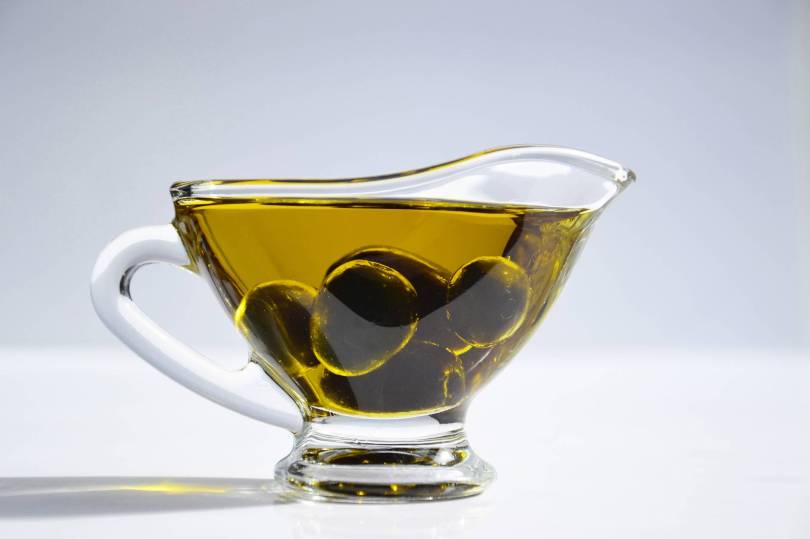
As I took a sip of my wine and quietly enjoyed the chaos swirling around me, I thought about how peanut oil made such an excellent addition to salad dressing.


 contentedlycreative.com